Overdose Awareness Month: Lauren Johnson on Building a Life Worth Choosing
Overdose Awareness Day began on August 31st, 2001 as a small grassroots gathering for people to mourn loved ones who had been lost to overdose. Since then, it has grown to encompass the month of August and has become the world's largest annual campaign focused specifically on overdose prevention.
Dream.Org’s Public Health is Public Safety campaign is dedicated to reducing overdose deaths by stopping harsh drug laws and advocating for people-centered policy that can actually save lives. For this year’s Overdose Awareness Month, we are sharing the stories of the real people behind the work. In a series of interviews, three Dream.Org team members from across the country will open about their lived experience with overdose, how it shapes their current work, and their dream on the other side of the overdose epidemic.
_________________
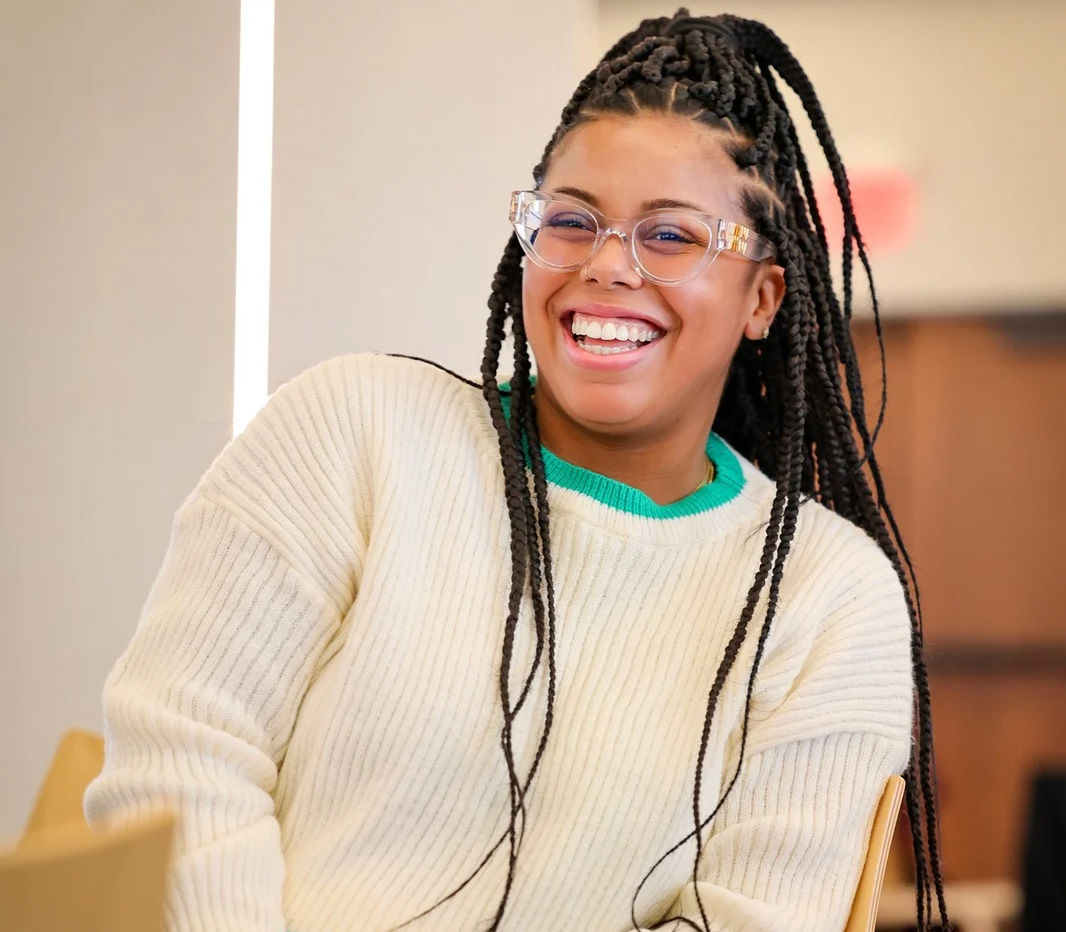
Our final interview is with Lauren Johnson, Dream.Org’s Justice Director. She spent seven years doing legislative policy work at the ACLU of Texas and now runs our state legislative campaigns across the country and is deeply committed to the idea that we have to be the change that we seek in the world.
She speaks on her experience of giving birth during incarceration, the fight to legalize fentanyl testing strips in Texas, and her belief that lasting recovery comes from creating a life worth working toward, rather than only trying to outrun addiction.
Sara Stickney: As justice director, you oversee Dream.org’s state legislative campaigns across the country. What does your work actually look like day to day?
Lauren Johnson: Day to day, sometimes it's putting out fires. In the thick of a legislative session, there are a million moving pieces between our Empathy Network leaders, lobbyists, the people that follow us and want to engage and write letters to the legislators, people in the Capitol, people who oppose our bills and things can change rapidly from one minute to the next. If you think of a game of telephone and how quickly rumors change and spread, there's a lot of managing information and keeping everybody kind of moving in the same direction. But outside of those high intensity moments, it's really meeting people, talking to people, and planning events. It can be wildly different from one day to the next.
Sara Stickney: You came to this work through your own recovery experience. How has your personal experiences shaped your work and dedication to the Public Health is Public Safety campaign?
Lauren Johnson: When I think back to the girl sitting on the bunk in prison and the dreams that she had and the things that she had to overcome. I never could have fantasized any of this. Like it wasn't within the realm of possibility in my mind. So when I reflect back, I think about the idea that my worst moments have brought me here.
I got arrested two days after I found out I was pregnant with my first son. And when I found out I didn't really know what was gonna happen next. Then before I really had any chance to figure out a plan for what to do, I was in the back of a police car on my way to jail. That experience - spending my whole pregnancy in jail, giving birth to my first son, imagining what kind of future and life I wanted for him, what kind of family I wanted to bring him up in - I both see it as some of the most beautiful moments and the absolute hardest thing that I've ever gone through in my life.
The system didn't really care too much about the fact that I was pregnant. When I wrapped my head around the idea that I'm giving birth, it changed everything for me, but it didn't change anything about my circumstances. And when I went to court, I talked to my attorney and I was so excited. I really thought that was gonna make some kind of difference in the potential outcomes for my case. And she just looked at me very coldly and said, “The state of Texas doesn't care if you're pregnant if you're committing a crime.” And my crime was substance use and the state of Texas also doesn't care if that's your crime.
When it came time to give birth, I didn't want to set him down. I only set him down when I had to go to the bathroom. My t-shirt still smelled like baby and I did not wash that t-shirt for the next six weeks while I was in that county jail. Then when I left, I just could not stop crying. I didn't want to sit there crying and looking crazy in front of all of these sheriffs people and the hospital people, but all I could do was cry. Because there's nothing that I could do.
When I got to the jail, they put me in a holding medical observation unit by myself, isolated me. And that was the worst thing you could have done to me. I needed to be around other humans where I could process what I had just been through. And I thought that was a unique experience to me, but I've actually heard other women who have had to give birth in jail talk about this and it kind of surprised me.
My experiences have shaped some of my work along the way. I've done a lot of work around women's issues and incarceration, fighting for the dignity bill in Texas. Fighting so that women would get seventy-two hours with their baby if they are in prison.
Sara Stickney: The Public Health is Public Safety campaign asks people to treat substance use as a health issue rather than a crime. Where does your own experience fit into how you approach that argument with those who see it differently?
Lauren Johnson: It has become important for me to not enter into every conversation with the underlying goal of pushing an agenda. I want to approach these conversations with curiosity. I want to understand what people believe, and I want to understand the experiences that led to those beliefs. Then, I am able to talk about my experiences and how they have led to the solutions I see working.
When I talk to people who want to treat it as a crime, it’s often in places where there is little to no other options. If jail is the only thing that looks like a solution in your town and you are dealing with a crisis situation then you use the solution you have available to you. When you talk to people about what they want, if it’s their friend or family, they’ll say that they want them to have access to treatment and services - but if those don’t exist, then what?
Sara Stickney: Of everything you're working on for the PHIPS campaign right now, what's the fight you're most locked in on this year, and why?
Lauren Johnson: For me, I’m gearing up for the next legislative session in Texas so we can fight to legalize fentanyl testing strips.
Texas is one of four states that hasn’t taken this step. Overdose prevention requires so many different approaches, but at $1 a strip this is one thing we can do that can save people’s lives. The main people who are affected by these strips being illegal, are the people who would otherwise be passing these testing strips out. Public health workers and even law enforcement have told us that they want to use this as another tool in their box, but while they are illegal, they can’t.
Sara Stickney: What's a moment in this work — big or small — that you go back to when you need reminding why you're doing it?
Lauren Johnson: I think what I tell other people about is how I got started. I was doing advocacy on the side and waiting tables to support my advocacy habit. I showed up and did what I could, when I could, and was able to change a law that people had been working on for 16 years. What made that possible was naive optimism. I just didn’t know it “couldn’t” be done and I tell people that story because I want them to have their own story like that, so that even when things look impossible they won’t let people stop them from trying. Hold on to the naive optimism that can literally change the world and have a significant impact in your community.
Sara Stickney: What's a piece of this work that's been harder than you expected? And what's been more rewarding than you expected?
Lauren Johnson: I think the hardest part of the work is the politics of politics. When politics gets in the way of doing what most of us recognize as a best practice or doing the most good for the whole community but political ego and personal fighting get in the way, that is hard and can feel defeating. What’s most rewarding is being able to connect people to their purpose, to opportunities and watch them take skills and connections and turn them into meaningful change, both for themselves and the communities that they are fighting for. It is beautiful to see the ripple effects of impact and know that in indirect ways I contributed to that.
Sara Stickney: You’ve mentioned before working toward an empty nest and dreaming about travel. What does it mean to you to be building a personal life on the other side of everything you went through?
Lauren Johnson: Everything. It means everything. My youngest son just signed on to the Marines and when he graduates in 10 months he will be on his way to boot camp. Being able to be present in the lives of my young adult children and see how our relationships transition into something different as they go off on their own has been beautiful and sometimes hard but I am so grateful for the opportunity. When my kids call me for advice or to talk through a problem they are going through I really feel like I got some things right along the way. I have mentioned before that the woman who sat on a prison bunk couldn’t have even dreamed the life I got to live. That applies to so many facets of life and I think it offers hope to people who might still be struggling. That you can’t even imagine how good and different life can be on the other side. Just keep taking one step forward at a time.
Sara Stickney: What is one belief about addiction you would like people to unlearn?
Lauren Johnson: When I think about addiction and remember when I was a person who was struggling and wanted nothing more than to be free from the grip it had on my life, I tried so many ways to control it or stop and felt like a failure and got caught in cycles of guilt and shame that fueled it even more. Looking back I can see that when things clicked was when I started building the things I wanted to move toward instead of focusing only on what I was trying to outrun.
So, yes, it was partially about not using substances but more than that it was about creating something that I wanted more than the drugs, and building the community alongside it. But it’s also less about addiction and more about recovery. There are many paths to a destination and if you notice that the path you are trying isn’t getting you there, then look at other paths. The key is having the ability to be authentic and honest about what that path is with a community that you are accountable to.
Sara Stickney: What’s your dream for Texas on the other side of this?
Laureb Johnson: Boy, do I have dreams for Texas. A Texas that invests in solutions and not creating more problems. A Texas that has legalized fentanyl testing strips and has accessible treatment available to anyone the moment they are ready for help. And a Texas that has economic opportunities that help communities flourish. I could actually spend an hour talking about my dreams for Texas and barely scratch the surface. The people here are amazing and friendly and they care, we just need policies that show it.