Overdose Awareness Month: John Bowman's Fight for Kentucky's Recovery Future
by Sara Stickney, Press Secretary
Overdose Awareness Day began on August 31st, 2001 as a small grassroots gathering for people to mourn loved ones who had been lost to overdose. Since then, it has grown to encompass the month of August and has become the world's largest annual campaign focused specifically on overdose prevention.
Dream.Org’s Public Health is Public Safety campaign is dedicated to reducing overdose deaths by stopping harsh drug laws and advocating for people-centered policy that can actually save lives. For this year’s Overdose Awareness Month, we are sharing the stories of the real people behind the work. In a series of interviews, three Dream.Org team members from across the country will open about their lived experience with overdose, how it shapes their current work, and their dream on the other side of the overdose epidemic.
_________________
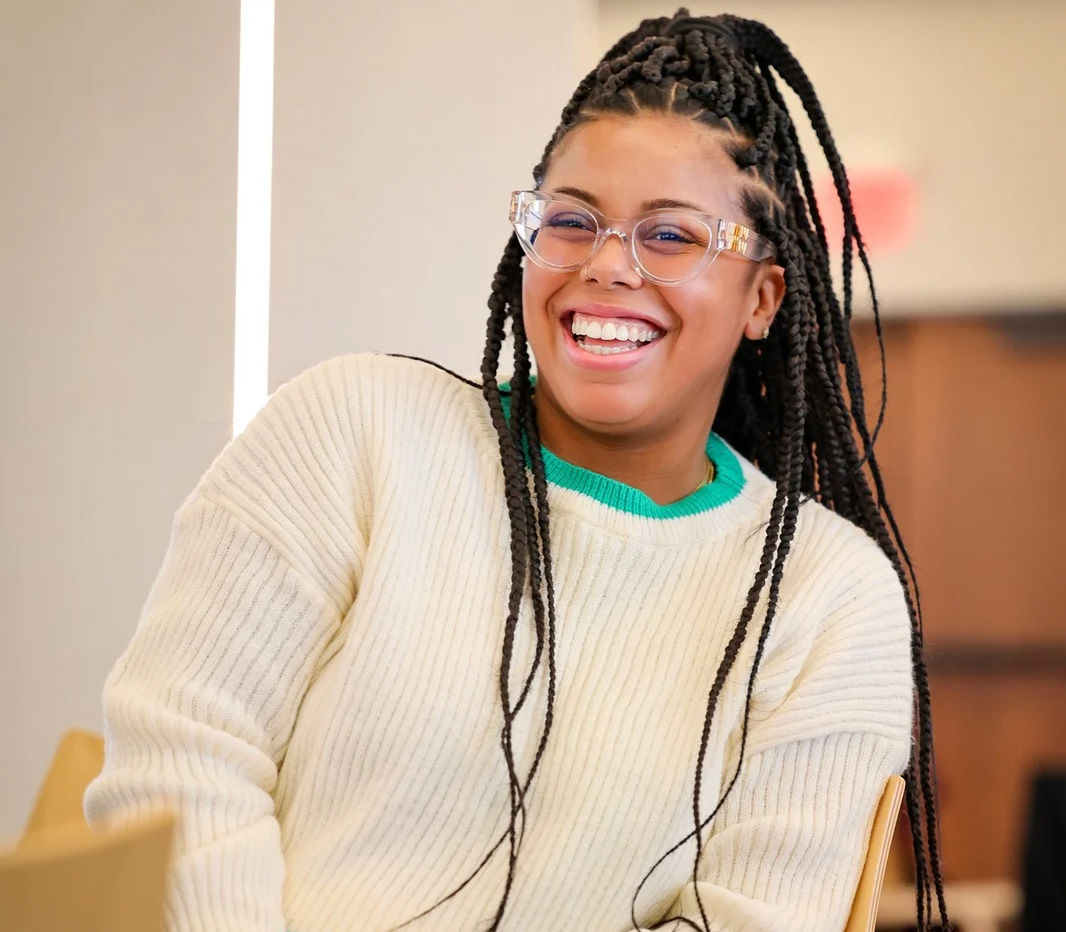
John Bowman is a proud native Kentuckian and Dream.Org’s Campaign Manager. Since overcoming 24 years of substance use, John has dedicated his life to advocacy and service and leads our efforts to advance criminal justice and drug policy reform across his home state.
In this interview, John speaks of his personal journey from substance use to recovery, the importance of protecting Kentucky's opioid settlement funds, his work advancing criminal justice and drug policy reform, and why treating substance use disorder as a public health issue is key to saving lives.
Sara Stickney: To start, what does your day-to-day work with Dream.org in Kentucky actually look like?
John Bowman: My day-to-day work here at Dream mostly consists of working on protecting opioid abatement funds. That is most of my time these days; working on criminal justice reform, such as the Clean Slate Initiative. We also just passed the Family Preservation and Accountability Act this past session.
And then we are also working on legislation for Buprenorphine regulations and those have taken most of my time this year. But the thing I spend most of my time on these days is definitely opioid abatement funds. Kentucky led the way for a long time in overdose deaths, and I want to make sure that people can look to us on how to spend these funds correctly.
Sara Stickney: How has your personal experiences shaped your work and your dedication to the Public Health is Public Safety Campaign?
John Bowman: For me, it's very personal. I spent twenty four years of my life in active use and I never got treated as a person during those times. People like to look down on folks who use substances and who are in and out of incarceration. That's been the majority of my life because I started my incarceration and drug use around the age of thirteen.
Now, I’m working to make sure that folks who suffer from the same things that I have don't have to go through the same experiences. The thing that we want with the Public Health is Public Safety campaign is for folks to look at substance use disorder and mental health and all those things that go into that as a health issue and not a criminal issue.
In this country, or at least in Kentucky, we criminalize poverty. We have anti camping laws and it's like we make more laws each year to punish people for being poor. With our campaign, we have brought a lot of light to issues in Kentucky, the main one being substance use and really getting people to see it as a disease. It's really hard breaking that stigma. But getting the right folks to be a part of the campaign and getting the right folks to collaborate with us on this project has been just invaluable.
It takes all of us and I think that's where Dream really excels is our work with unlikely allies. We don't care who we work with. As long as people are doing the work correctly and doing it for the right reasons, I don't care if they're a law enforcement officer or which side of the aisle they're on politically. I just want to make sure that we are doing things for the right reasons to help my fellow Kentuckians and my fellow Americans.
Sara Stickney: Was there a specific moment where you realized this is what you wanted to do with your career?
John Bowman: When I first got into recovery, and really found myself, I knew I wanted to help folks. I just didn't know in what capacity and it took a couple of years and a couple of different jobs to really see how I wanted to help people. Instead of helping people eight at a time in a group setting or one on one, now I can help thousands at a time by passing legislation, by making good policy or defeating bad policy. It took seeing that part of it for me to really understand that yes, I really love this part of it and this is what I want to do.
Sara Stickney: Going back, you said Kentucky has one of the highest overdose deaths in the country, right?
John Bowman: We did, yes, for the longest time. In 2017, 2020, and 2021 2022 we were ranked third in the country each year for the number of overdose fatalities. For the past four years our overdose rates have gone down each year and it's not because we have more treatment beds per capita than any other state - which is true - but because folks on the front lines are doing the actual work. The folks going out into our communities and meeting people where they're at and doing the work that no one else wants to do.
Sara Stickney: Kentucky also has one of the highest incarceration rates in the country as well, yes?
John Bowman: If Kentucky was a country on its own, we would rank seventh in the world in incarceration. That's a lot for a state with four million people.
Sara Stickney: What are some of the unique elements in Kentucky specifically that are creating these problems?
John Bowman: The main one is our drug laws. The biggest driver of incarceration in our state is our bad drug policy. That's why our jails and prisons are overpopulated. It seems like we try to at least make one bad law every year.
Incarceration has not done anything for our drug issue. All it does is add trauma to a lot of folks' lives. If we can get away from these punitive policies and really start looking at things through a health lens, I think we can actually make the number of incarcerated individuals in Kentucky go down.
We’re also a supermajority red state. It's really hard to get criminal justice reform done without working with folks on the right. We try to do everything as bipartisan as possible and work with law enforcement anywhere we can because it always does good in Kentucky when our elected officials see that we have the backing of law enforcement on a bill. They love their law and order.
Sara Stickney: Is it difficult to sit across from someone, whether they be a legislator or an officer, who still sees addiction primarily as a crime problem?
John Bowman: It's infuriating. We've done it their way for the past fifty years and it's not working. If the war on drugs was successful, then we wouldn't be having this conversation and wouldn't have gone through the opioid epidemic. So yes, it's very infuriating when you're sitting across from someone and all they think of is crime and punishment. They’re someone who has never been incarcerated a day in their life or suffered from an issue with substance use. They don’t have that lived experience but want to make laws against it and don't take the time to actually talk to someone who's gone through that lived experience. It takes a lot to really get under my skin but some folks can when it comes to substance use and the way that they talk about it.
Folks who suffer from substance use are not less than, they're not second-class citizens. If we treat those folks like they're people, we will get better results. Trying to get that across to someone who only sees them as criminals is extremely hard.
Sara Stickney: But you do it because you know that it has to be done. That's why we're here at Dream.Org, right?
John Bowman: Yes, and that's why we work with anyone. It doesn't matter if they infuriate me or not if they can get if they can move the needle. Sometimes you gotta get those folks that don't agree with you. You gotta have that opposition sometimes.
We work in a lot of coalitions here in Kentucky and I try to have someone from the opposition side in every coalition. It takes those folks as well because we can't do this alone. Even though it's infuriating, even though you want to reach across the table and just shake them and be like, “What's wrong with you?”, you can't. You have to keep an open mind and an open heart, and hopefully our actions and the way that we do things will help them see differently.
Sara Stickney: Let's go back to the Opioid Settlement Fund you mentioned as a big part of what you do. Can you tell me a little bit more about your specific role in that and the work that's being done?
John Bowman: Actually, today I was on a call with our Kentucky Opioid Solutions Network, which just started here a couple months ago. We got asked to do technical assistance for twenty different counties around building advisory boards, local ordinances, and things of that nature. It's because of the work that we've been doing around this.
Opioid settlement funds are near and dear to my heart because I've lost the majority of my friends to this disease. They're all buried in my hometown cemetery. Out of 20 friends, there's 3 of us left. Going back over thirty years, these are all the friends that I grew up and went to school with.
It means more to me to make sure that these funds aren’t squandered and to be their voice because they don't have one. This is a settlement and it can be recalled if we do not spend these funds correctly.
Sara Stickney: You talked about people with lived experience being a part of deciding what to do with this money and how it gets spent. What does it look like on the ground when this money is spent well versus poorly?
John Bowman: When it gets spent well is when it gets down to the street, when it gets to the people and to the communities that need it. There's a lot of programs that have been defunded in the past couple of years, whether it be harm reduction, needle exchanges, or whatever. But these are the things that keep our community safe and make sure that people stay alive.
An example of bad spending would be a cruiser or a bulletproof vest for a canine dog. I don't have anything against bulletproof vests for canine dogs or cruisers. I have a problem with these funds being spent on it, though. We can put those things in a regular budget line item. We don't have to take these finite amounts of funds and spend them on that.
Sara Stickney: If a local official who was sitting on this settlement money called you tomorrow and asked "where do we even start," what's the first thing you'd tell them?
John Bowman: They need to make sure they give the folks that have that lived experience a seat at the table and see what they have to say. They know what needs are in the communities they live in. And that's what I tell most elected officials: start with the needs assessment. See what resources you have and I would start where you don't have resources. Whether that be a needle exchange, a drop in center, street outreach, or going out and making sure folks have access to proper hygiene. Start with the folks who have been through this hell of substance use, opioid use disorder in your communities and bring them to the table. They don't know all the solutions, but they do know some solutions that will work and solutions that won't.
When we ask folks what they need, we get better responses. But when we tell them “this is what you need in your community”, it never goes over well because I don't know what every community needs, because I don't live in every community.
Sara Stickney: Addiction recovery isn't necessarily people's first thought when they're talking about public health and safety, but why do you think that is and how can that mindset be changed?
John Bowman: Honestly, education is probably the biggest one. That's how we break stigma. That's how we move the needle and change hearts and minds.
We get those directly impacted people that don't mind telling their story and get them to talk to their elected officials or to their community members and make sure communities are educated on these issues. It all starts with community education to make sure folks are understanding what we're trying to do with public health and public safety.
Sara Stickney: What are some of the resources that you wish more people who needed them in Kentucky knew existed when it came to addiction and recovery?
John Bowman: I wish more people knew about our harm reduction resources and I wish we had more. We have like 70 syringe service programs in Kentucky, more than just about any other state, but they're only open one or two days a week or for an hour here and there.
We're doing these things called the hub model here in Kentucky with some of these opioid abatement funds. And it's basically like a one-stop shop. You can get clothes, see a therapist, get peer support, get your medical stuff checked out or get syringes, wound care, things of that nature. I think we need those in every community because every community is going through the same type of situation across the state. It doesn't matter if it's the most affluent neighborhood or the poorest neighborhood. They both go through the same stuff. Drug addiction does not discriminate.
Sara Stickney: What's a piece of this work that's been harder than you expected, and what's been more rewarding than you expected?
John Bowman: The hardest part is getting legislation across the finish line. Getting it through all the difficulties that you have to go through in session and actually getting laws changed, getting the momentum, and getting the votes. But it's also the most rewarding.
When you get a piece of legislation that's gonna help a lot of folks who suffer from say substance use passed, it makes a huge difference. For me, the biggest one so far has been H.B. 353, during my first year at Dream. It legalized fentanyl test strips. Which doesn't sound like a big deal, but it's a little strip that checks for presence, not potency, and here in Kentucky, they were illegal.
It's the most infuriating work that I've done sometimes, but man, it's the most rewarding too when it comes to fruition. It takes a while sometimes to get something across the finish line, but when it happens it's a beautiful thing.
Sara Stickney: What do you want people outside of Kentucky to understand about the state that they might not get from the outside looking in?
John Bowman: The main thing is that the people here are what makes Kentucky special. You look at the makeup of our legislature, or some of the bad pieces of legislation that come out of here, or that we have some of the poorest communities in the country - it's still the people here that make Kentucky special. It doesn't matter if you're on the Big Sandy in Pike County or if you're in Fulton County on the Mississippi, the people make you feel special and they won't let you go without, even if they don’t like you. That's not something you find everywhere. I've never been anywhere else like it. No matter where I go, it'll always be home.
Sara Stickney: What's your dream for Kentucky on the other side of all of this?
John Bowman: My dream for Kentucky is for it to live up to its potential. For the world to see it through the same lens that I see it. To lead the way not only in recovery but in harm reduction services, in the way that we spend opioid settlement funds, in the way that we look at substance use disorder. My dream for Kentucky is for it to be the best state in the US when it comes to any of these issues. My dream for Kentucky is for it to get better each and every day.